

No-Code AI Integration: How Non-Tech Teams Are Driving Enterprise Innovation in 2026
The most surprising trend in enterprise technology for 2026 is not a new programming language, a better database framework, or even generative intelligence. It is something far less glamorous and infinitely more powerful.
Non-technical employees are building AI-powered automations that used to require entire engineering teams. A supply chain coordinator in Calgary just deployed an intelligent inventory forecasting tool. An HR manager in Toronto automated the resume screening pipeline. A sales operations lead in Vancouver built a dynamic pricing assistant - all without writing a single line of traditional code.
This is the no-code AI revolution, and it is reshaping how enterprises approach digital transformation from the bottom up rather than top down.

What No-Code AI Integration Actually Means
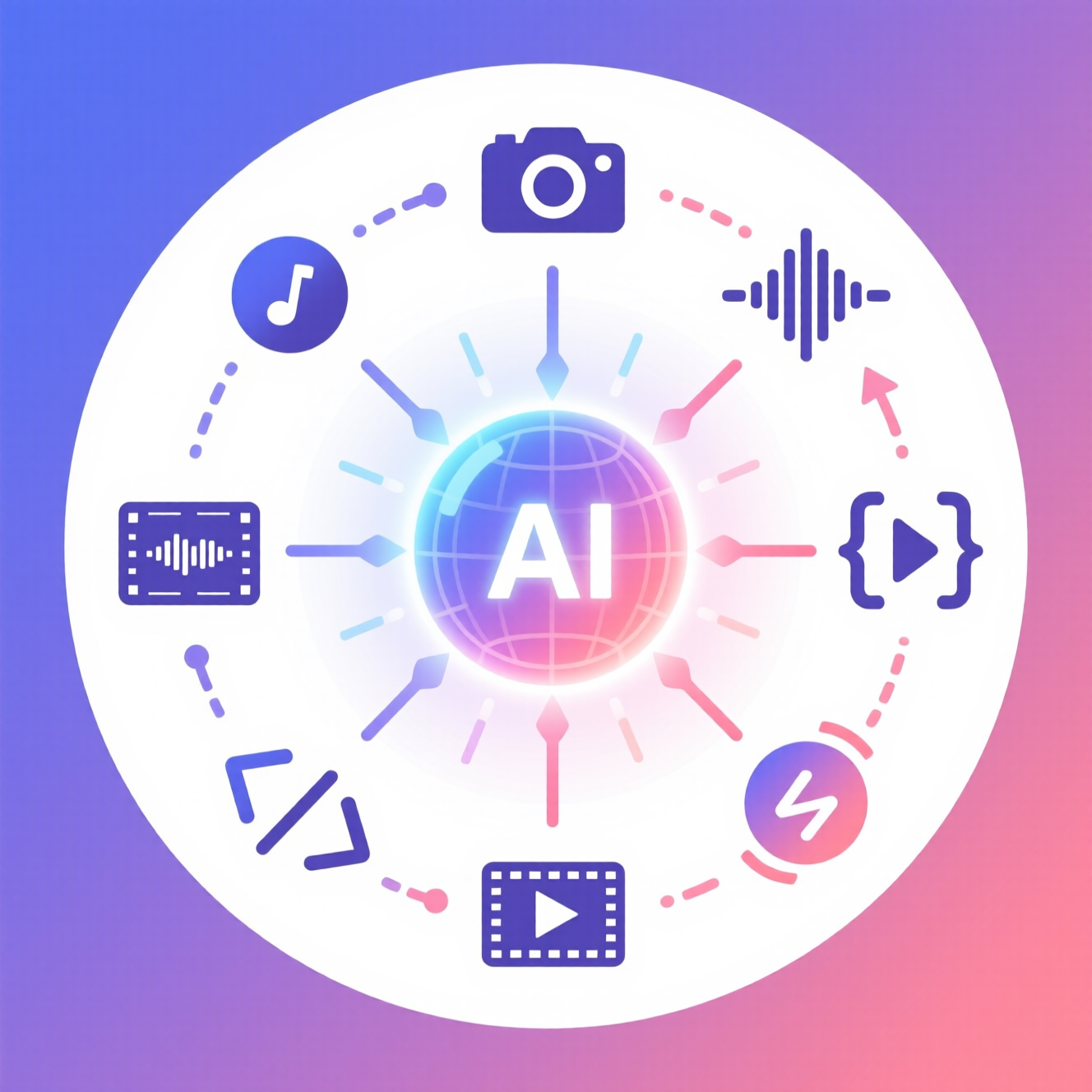
No-code AI integration refers to platforms and tools that allow users with minimal or no programming experience to create, configure, and deploy AI-enhanced applications. These platforms combine visual drag-and-drop interfaces with pre-built AI models for natural language processing, computer vision, predictive analytics, and conversational agents.
By 2026, this is not a futuristic concept. McKinsey estimates that over 60% of mid-market enterprises now have at least one business-user-developed automation in production. The number is accelerating because the tools have finally crossed the usability threshold - they are genuinely intuitive enough for domain experts to build solutions without becoming software engineers.
The Productivity Multiplier That Enterprises Are Missing
Consider a typical mid-size Canadian manufacturer. They manage inventory across three warehouses, process purchase orders manually through email chains, and rely on Excel spreadsheets to track production schedules. When IT is backlogged with feature requests, these inefficiencies compound into real financial drag.
A no-code AI approach changes the calculus entirely. Instead of submitting a ticket that sits in an IT queue for six weeks, the operations manager can:
- Deploy an intelligent document processor that reads incoming supplier invoices, extracts key fields using optical character recognition paired with natural language understanding, and populates the ERP system automatically - without custom middleware.
- Create a predictive reorder system by connecting historical sales data from the ERP to a pre-built forecasting model, setting alerts when inventory levels approach threshold boundaries.
- Build a customer service assistant that ingests the company knowledge base and answers routine product questions via chat - reducing support team load by an estimated 35 percent.
The total implementation cost? Often less than five percent of what a traditional custom software approach would require. The time from concept to production? A matter of days or weeks rather than months.
Where No-Code AI Integration Fits and Does Not Fit

The critical insight is understanding boundaries. No-code platforms excel at well-defined workflows with structured inputs and predictable outputs. Customer onboarding automation, invoice processing, appointment scheduling, lead qualification, report generation - these are ideal candidates.
What no-code AI cannot replace? Core business logic embedded in legacy systems, custom algorithmic trading strategies, safety-critical manufacturing control loops, or anything requiring real-time processing below millisecond latency. These domains still need skilled engineers and architects with deep domain expertise.
This is where a measured approach matters. Organizations that succeed at no-code AI integration establish clear governance: which teams get access to what tools, what types of automation can be self-deployed, and what solutions must go through IT review for security and data integrity reasons.
The ERP Connection You Are Probably Not Considering
Here is a point most no-code discussions ignore entirely: modern cloud ERP systems are becoming the integration backbone that makes no-code AI possible at enterprise scale. Why?
Cloud ERP platforms like SAP S/4HANA Cloud, Oracle Fusion Cloud, and Microsoft Dynamics 365 now ship with native connectors to popular no-code automation platforms. This means a marketing manager in Edmonton can visually map customer journey data from the ERP CRM module, enrich it with AI-based sentiment analysis, and trigger automated follow-up sequences - all within the same platform chain.
The practical implications:
- Single source of truth - business-user automations pull directly from authoritative ERP data instead of stale exported CSVs or shadow spreadsheets.
- Built-in compliance - ERP-level access controls, audit trails, and data governance policies follow automation workflows automatically.
- Scalable architecture - automations built on ERP-connected no-code platforms benefit from the same enterprise reliability and disaster recovery capabilities as mission-critical business applications.
Organizations that treat ERP transformation and no-code AI adoption as separate initiatives are missing out. The convergence of these two trends in 2026 creates a fundamentally different operating model for how work gets done across an enterprise.
A Practical Framework for Getting Started
If your organization is considering a no-code AI integration strategy, the arc-tech team at ArcBeta recommends this progressive approach:
Phase One: Discovery and Prioritization (Weeks 1-3)
Audit internal workflows to identify repetitive tasks that generate high volume. Interview department managers about their biggest productivity pain points. Score opportunities using the formula: (hours saved per week) x (employee hourly rate) divided by (estimated implementation complexity).
Phase Two: Proof of Concept (Weeks 4-6)
Select one high-impact, low-complexity automation to build as a proof of concept. Choose something with clearly measurable outcomes - document processing or automated reporting work well for initial pilots. Involve the actual end users in building and refining the solution.
Phase Three: Governance and Policy (Weeks 6-8)
Establish what business users can self-deploy versus what requires IT review. Define data security requirements, testing standards, and rollback procedures. Set up a center of excellence where experienced citizen developers mentor newcomers.
Phase Four: Scale and Optimize (Week 8 onwards)
Expand program based on early results. Track metrics around time saved, error reduction, employee satisfaction, and cost avoidance. Begin integrating no-code automations with ERP data pipelines for enterprise-scale impact.
The Business Case Nobody Is Emphasizing
Every discussion about no-code AI ends with cost savings. But the deeper business value may actually be organizational agility.
When a sales operations analyst can build a lead-scoring automation in an afternoon instead of waiting three months for the engineering team, the entire revenue organization becomes more responsive to market changes. When a manufacturing supervisor can adjust production scheduling rules without IT involvement, downtime decreases and throughput increases. That is operational resilience - an advantage that compounds across every quarter.
Research from Gartner suggests that by 2028, organizations with mature no-code programs will achieve up to four times faster application delivery timelines compared to traditional development shops. The speed difference is not marginal - it fundamentally changes how organizations adapt to competitive pressure.
Bridging the Gap Between IT and Business Teams
One of the less discussed benefits of no-code AI integration is its ability to bridge organizational communication gaps that have persisted for decades. When business users build their own solutions, they develop a practical understanding of what software can and cannot do. Conversely, when IT teams see the impact of business-user automations, they begin viewing citizens as partners rather than blockers.
This cultural shift matters more than any single tool implementation. Organizations that cultivate this collaborative dynamic consistently outperform peers on digital maturity scores, employee retention metrics, and customer satisfaction indices - regardless of technology stack.
Looking Ahead: What the Next 18 Months Bring
The trajectory is clear. Industry analysts project that no-code AI platforms will see bimodal growth acceleration through 2027, driven by maturing model quality, expanding connector ecosystems, and improved governance tooling from major cloud providers. We expect to see the emergence of specialized vertical platforms tailored for specific industry workflows - healthcare compliance automation, financial services regulatory reporting, manufacturing quality management.
For enterprise technology leaders in Canada planning their 2027 budgets, no-code AI integration should move from experimental category to structured investment line item. The early adopters are already running production workloads. The organizations still treating it as a side experiment risk widening the productivity gap with competitors who chose to empower their non-technical workforce instead of leaving innovation solely to engineering teams.
Takeaways
- No-code AI tools are now enterprise-ready - production deployments from business users are widespread and measurable across industries.
- Cloud ERP integration unlocks enterprise-scale automation - connecting no-code platforms to authoritative data sources transforms pilot projects into permanent infrastructure.
- Governance matters - successful organizations establish clear boundaries between self-deployed automations and IT-reviewed solutions from day one.
- Start with a proof of concept - identify one high-volume repetitive task, build a solution in weeks not months, and scale from demonstrated results.
- The organizational culture shift may be the biggest ROI driver - bridging IT and business teams produces compounding benefits that extend far beyond any single automation.
Whether your focus is ERP modernization, custom software development, or broad-based IT consulting, understanding no-code AI integration is no longer optional. It represents the fastest path to delivering measurable enterprise value in 2026 and beyond. The teams building the future are not necessarily wearing engineering badges - they are sitting next to you in marketing, operations, finance, and HR.
