
Event-Driven Architecture for Modern Enterprise Systems: A Practical Guide
The digital landscape has shifted from static, batch-oriented processing to a world where information flows continuously. Businesses that can react to changes in real-time -- whether tracking inventory levels, monitoring customer behavior, or detecting anomalies in supply chains -- are fundamentally outperforming their competitors. This shift is driven by one architectural pattern: event-driven architecture.
For organizations across Canada evaluating their technology strategy, understanding and implementing event-driven approaches is no longer optional. It has become a prerequisite for building systems that scale, adapt, and integrate seamlessly with modern enterprise platforms including ERP solutions and custom software development initiatives.
What Is Event-Driven Architecture?
At its core, event-driven architecture (EDA) is an approach to system design where the flow of data is driven by events -- significant changes in state or meaningful occurrences within a system. Think of an event as a signal: "this thing just happened, and other parts of the system need to know."
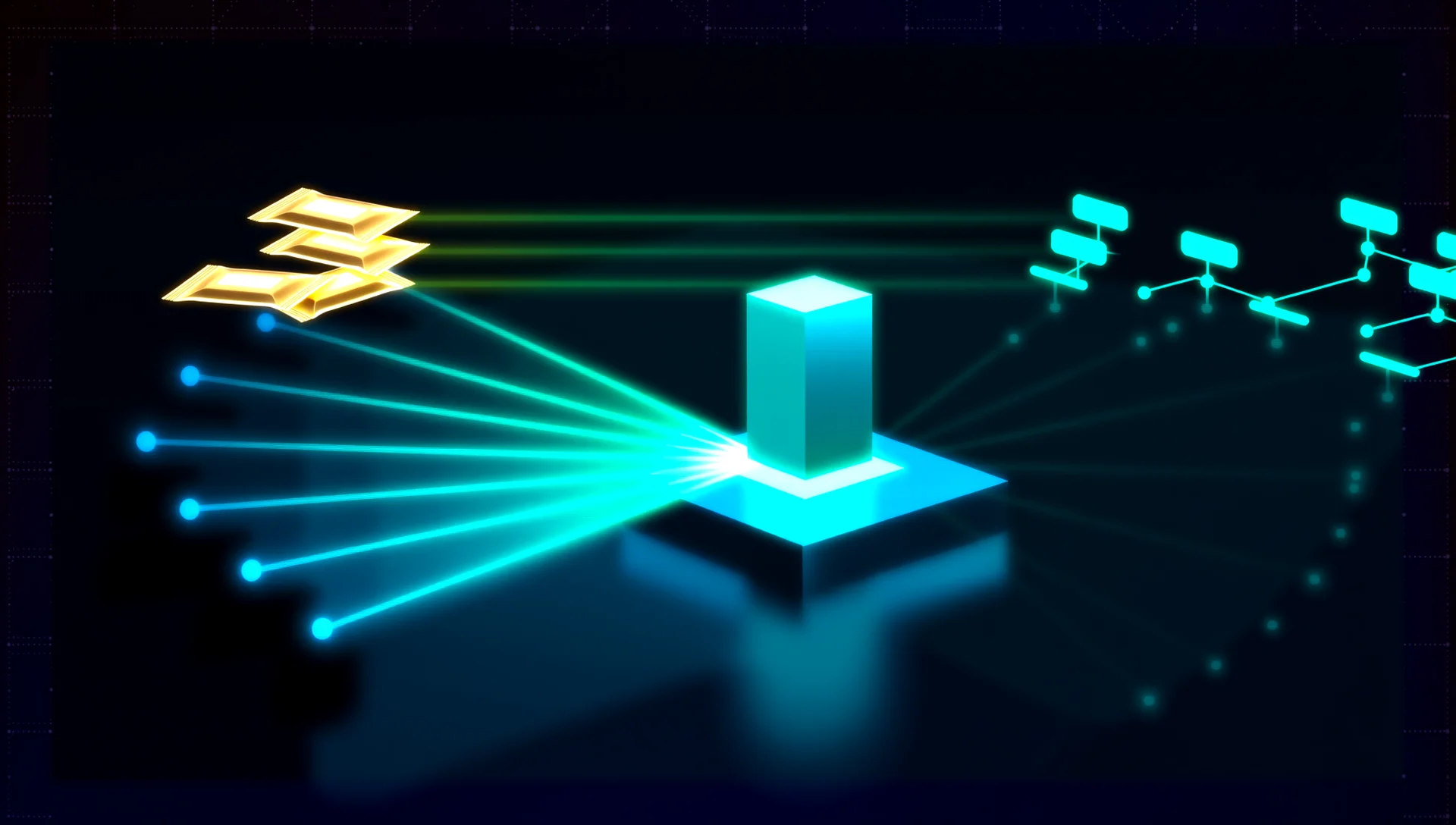
In traditional architectures like synchronous REST APIs, systems poll for information or respond only when directly asked. This creates latency, coupling, and bottlenecks. EDA turns that model on its head by decoupling producers (systems that generate events) from consumers (systems that act on those events) through a central broker or messaging infrastructure.
The fundamental components are straightforward:
- Event Producers: Services or applications that detect and publish events when something meaningful occurs -- an order placed, inventory updated, payment processed
- Event Brokers: Messaging platforms (Apache Kafka, RabbitMQ, Azure Service Bus) that receive, route, and deliver events to interested consumers
- Event Consumers: Services that subscribe to specific event types and execute business logic in response -- updating dashboards, triggering workflows, sending notifications
- Event Store: A durable log of all events emitted over time, enabling auditability and replay capabilities
Why Enterprises Are Adopting EDA in 2026
The reasons for the widespread shift toward event-driven patterns are both technical and strategic. Here are the key drivers reshaping enterprise architecture decisions:
Real-Time Decision Making
Legacy batch processing models typically run overnight or on hourly schedules. A retail chain wouldn't know its inventory was critically low until the next morning's data pull, potentially losing sales across dozens of regional stores. With event-driven systems, every transaction and inventory update flows immediately to downstream consumers -- warehouse management, procurement triggers, customer-facing stock levels -- enabling genuinely real-time visibility.
Solution to Legacy Integration Challenges
Most Canadian enterprises operate a heterogeneous technology landscape: legacy ERP systems from vendors like SAP or Microsoft Dynamics, modern microservices, legacy mainframe applications, and third-party SaaS platforms. Point-to-point integrations between these systems create fragile coupling that breaks whenever any single component changes.
EDA provides a communication fabric that allows disparate systems to exchange information without direct dependencies. New services can subscribe to existing event streams without modifying the producers, dramatically reducing integration friction during digital transformation initiatives.
Scalability Through Asynchronous Processing
Events are naturally suited for asynchronous processing. When customer demand spikes -- holiday shopping events, flash sales, or seasonal peaks -- an EDA-based system absorbs the burst by queuing incoming events. Consumers scale independently to process the backlog. The upstream producer never blocks waiting for consumers to finish their work.
This decoupled scaling model is especially valuable for AI-powered services feeding on enterprise data streams. Real-time recommendation engines, fraud detection systems, and predictive maintenance models all benefit from processing event streams at their own pace and scale.
Resilience and Fault Tolerance
In a synchronous system, when one service fails, the calling chain cascades -- order service waits for inventory check, which waits for pricing service. If any component hangs, the entire transaction stalls. EDA breaks this dependency chain: events queue up during outages and get processed automatically when systems recover.
Core Patterns in Event-Driven Design
Successful enterprise implementations don't just throw Kafka at a problem -- they follow well-established patterns tailored to specific business needs:
Event Sourcing
Rather than storing only the current state of a business entity, event sourcing records every change as an immutable event. The complete sequence of events serves as the source of truth. To recover the current state, you replay the event log.
This pattern provides several advantages for enterprise systems:
- Full audit trail: Every change is permanently recorded with timestamps and context, critical for regulatory compliance in Canadian financial services, healthcare, and government sectors
- Temporal queries: You can reconstruct the state of any entity at any point in time -- essential for debugging discrepancies and generating historical reports
- Built-in event stream: Event sourcing naturally produces the same event streams that feed EDA consumers, eliminating a separate integration effort
CQRS (Command Query Responsibility Segregation)
CQRS separates read operations from write operations, allowing each to be optimized independently. Commands modify state and emit events. Queries read from specialized views built by consuming those events.
In practice, CQRS pairs exceptionally well with event sourcing. Write models maintain domain consistency. Read models can use denormalized data stores -- Elasticsearch for search, Redis for cached lookups, specialized OLAP databases for analytics -- each optimized for its specific query patterns without the performance penalties of complex JOINs against normalized transactional tables.
Saga Pattern for Distributed Transactions
In traditional relational databases, ACID transactions guarantee consistency across multiple operations. In distributed EDA systems, you need a different approach. Sagas break multi-step business processes into a sequence of local transactions, each followed by an event that triggers the next step.
If a step fails, sagas define compensating actions -- reverse operations that undo previous changes. The "Confirm Payment Saga" in an e-commerce system illustrates this: confirm inventory reservation → process payment → ship order. If payment fails, the saga emits a compensating event to release the inventory reservation.
Practical Implementation Steps
Moving from theory to production requires careful planning and phased execution. Here is a proven approach for enterprises embarking on this journey:
Phase 1: Identify High-Impact Event Domains
Not every system needs to migrate to event-driven immediately. Start by mapping your business processes and identifying domains where latency matters most -- inventory management, order processing, compliance monitoring, or customer notification systems.
Conduct an integration audit: list all current point-to-point integrations, their failure modes, and the business impact when they break. The integrations causing the most pain are your best candidates for EDA modernization.
Phase 2: Select Messaging Infrastructure
The infrastructure choice should reflect your organization's cloud strategy and existing competencies:
- Apache Kafka: Best for high-throughput, low-latency event streaming. Excellent ecosystem with schema registries and stream processing libraries. Self-managed or available through Confluent Cloud
- Azure Service Bus / RabbitMQ: Better suited for reliable messaging patterns like work queues, request-reply, and publish-subscribe with message persistence. Ideal when strict delivery guarantees matter more than raw throughput
- Cloud-native options (AWS EventBridge, GCP Pub/Sub): Best if you are already invested in a specific cloud platform. Managed service reduces operational overhead but may introduce vendor lock-in concerns for multi-cloud strategies
Phase 3: Design the Event Schema
Events are your contract. Poorly designed event schemas lead to unmanageable complexity as systems proliferate. Follow these principles:
- Use the CloudEvents specification or a similar standard for consistent envelope structure across all event types
- Name events in past tense ("OrderPlaced", "PaymentProcessed", "InventoryAdjusted") to represent something that already happened
- Avoid including sensitive data in events -- they flow through brokers and queues accessible by multiple consumers
- Version your events explicitly. Schema evolution must be backward-compatible; never delete or rename fields in schemas already consumed by downstream systems
Phase 4: Build Incrementally Starting at the Edge
Risk-averse enterprises should not attempt a complete rip-and-replace of their integration layer. Instead, adopt EDA incrementally:
Start with a new service that needs real-time notifications and have it publish events to your broker alongside its traditional API calls. This creates an event stream you can consume immediately without disrupting existing systems. Gradually expand the set of services publishing events as confidence grows and operational patterns become established.
Measuring Return on Investment
Starting with baseline cost section listing tracked metrics in a concrete implementation:
Metrics to track before EDA migration:
• Average data latency from source event to downstream consumption
• Number of integration endpoints between systems
• Incident rate related to integration failures or timeouts
• Time required to onboard new systems into the integration landscape
• Mean time to recovery (MTTR) when an integration breaks
The three most impactful ROI categories organizations typically observe after adoption:
- Processing Speed Improvement: Moving from overnight batch processing to real-time event streaming typically reduces data latency from hours to milliseconds, enabling business decisions that were previously impossible due to information staleness
- Error Rate Reduction: Point-to-point integrations create cascading failures when any connection breaks. EDA with message queues absorbs these failures gracefully, often reducing integration-related incidents by 60-80% within the first deployment cycle
- Staff Reallocation Value: Maintenance of bespoke integrations consumes significant engineering hours. EDA standardizes the interaction model and centralizes routing logic, freeing developer capacity for feature work instead of plumbing maintenance
The payback period typically ranges between 12 to 18 months depending on the size of the existing integration footprint. Implementation costs vary based on whether you invest in self-managed infrastructure or leverage managed cloud services -- the latter generally has higher per-unit data costs but eliminates dedicated operational overhead.
Challenges to Anticipate
Event-driven architecture is not without its complexities. Understanding these pitfalls early prevents costly rework:
- Eventual consistency: In an EDA system, multiple consumers update different views of the same data asynchronously. Until all consumers process the event sequence, the various representations of your data will diverge temporarily. Application logic must handle this inherent inconsistency through idempotent processing and optimistic concurrency control.
- Operational complexity: Monitoring a distributed event stream requires new tooling beyond traditional service health checks. You need visibility into queue depths, consumer lag rates, dead-letter queues, and processing throughput across every stage of the event pipeline.
- Event schema governance: Without strong governance, event schemas evolve inconsistently across teams. Some producers include additional fields; others drop fields silently. Schema registries enforce compatibility rules but add operational overhead that small teams may find difficult to maintain.
- Cross-system debugging: When a business transaction spans multiple services through event propagation, tracing the complete flow requires correlation identifiers carried through every event in the chain. Without this observability infrastructure, debugging production issues becomes exceptionally time-consuming.
Building Your Implementation Roadmap
A structured implementation approach minimizes risk while maximizing early wins:
- Assessment & Planning (Weeks 1-4): Map existing integrations, identify priority event domains, select messaging infrastructure based on throughput requirements and cloud strategy.
- MVP Event Stream (Weeks 5-8): Deploy the message broker, design schemas for your highest-priority domain, build one producer service and two consumer services to validate the end-to-end flow.
- Pilot Expansion (Months 3-4): Onboard three additional production services to publish events. Establish monitoring dashboards, alerting thresholds, and runbooks for common operational scenarios like lag spikes and broker failures.
- Scaling & Optimization (Months 5-8): Expand event coverage to the remaining service portfolio. Implement event sourcing for your most critical entity domains. Optimize consumer parallelism and batching configurations based on measured throughput requirements.
- Governance & Standardization (Months 9+): Formalize schema governance processes, establish cross-team review ceremonies for new event types, and document architecture decisions to enable future engineers to navigate the event landscape independently.
The Connection to ERP and Enterprise Software
ERP systems sit at the center of most enterprise data landscapes. Modern ERP platforms increasingly support event-driven integration natively -- SAP's SAP Event Mesh, Microsoft Dynamics 365 with Azure Service Bus connectivity, and Oracle Cloud EPM all expose real-time event streams. Migrating point-to-point ERP integrations to an event-driven model often provides the single largest return on investment in an enterprise architecture program.
For Canadian businesses operating regulated industries -- financial services subject to OSC guidelines, healthcare providers bound by PHIPA legislation, government entities following Treasury Board standards -- event-driven systems provide built-in audit trails through immutable event logs. Every state change is captured with its timestamp and context, simplifying compliance reporting and reducing the cost of external audits.
The combination of event-driven architecture with ERP modernization represents one of the most impactful technology investments organizations can make in 2026. The key insight underlying that investment is simple: treat business events as first-class citizens in your architecture rather than afterthoughts generated by systems trying to communicate.
Conclusion
Event-driven architecture has evolved from an architectural novelty into a foundational pattern for modern enterprise systems. Its ability to deliver real-time visibility, decouple independent services, and absorb traffic spikes makes it essential for organizations building digital platforms that must perform reliably at scale.
The transition requires careful planning -- particularly around event schema design, governance processes, and operational tooling -- but incremental approaches let you realize benefits early while minimizing risk to existing operations. Organizations that start their journey in 2026 will be well-positioned for the increasingly fast-paced enterprise software landscape where agility and real-time responsiveness separate market leaders from laggards.
Whether your organization is beginning with a single event stream or planning a comprehensive migration of its ERP integration layer, the principles remain the same: design events as first-class citizens, govern schemas rigorously, monitor consumption patterns proactively, and measure outcomes against clearly defined business metrics. The architecture that serves you well today will be the foundation upon which tomorrow's innovations are built.